Given the amount of underground infrastructure in the Netherlands, the surveying of cables and pipes is very important. This applies to newly laid cables and pipes as well as existing cables and pipes.
In order to prevent excavation damage to cables and pipes, the surveying of cables and pipes is important. Existing cables and pipes are often first excavated by means of a trial trench before they are measured. It is easier with new cables and pipelines. The measurement then takes place before the trench is plugged. The exchange of information of cables and pipes is nowadays in accordance with the WIBON. But the measurement of cables and pipes in Prorail's management area has additional requirements. In addition, it is wise to measure cables and pipes with a flat foot so that the cables and pipes are not damaged.
To make everything clear on this topic, we will answer the following questions in this article:
- Why is surveying cables and pipes important?
- What is the best way to measure existing cables and pipes?
- How to quickly measure newly laid cables and pipes?
- Are there any specific requirements for surveying cables and pipes?
- Are there any other tips for surveying cables and pipes?
Measurement of cables and pipes: the solution
You may not have the opportunity to read this entire article. Therefore, there is another opportunity to learn more about surveying cables and pipes.
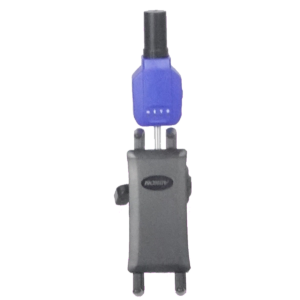
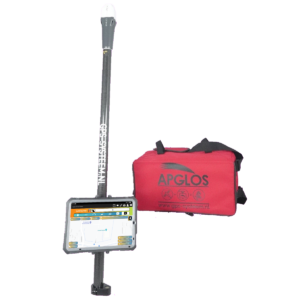
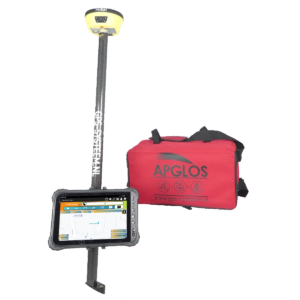
You can try a GPS measurement system through this website. To do so, look directly at this page.
You can also request a demonstration of one of our GPS surveying systems. At this demonstration you can also ask specific questions about surveying cables and pipes and of course about other topics related to GPS surveying.
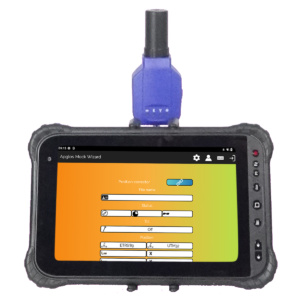
If you don't have time for a demonstration or want to try the software of our GPS measurement systems quickly in between, that is possible. Apglos Survey Wizard is the easiest software to perform GPS measurements with. You can download it for free from the Google Play Store.
The surveying app Apglos Survey Wizard has full functionality with your Android device's GPS. So you can fully test this app and it is free.
Of course, the accuracy of our GPS receivers is better than that of standard Android devices. So if you would like to do a test with an accurate system, check out this page.
Why is surveying cables and pipes important?
There are more than 2 million kilometers of cables and pipes underground in the Netherlands. Because they lie underground, it is difficult to determine exactly where the cables and pipes are located. This is why damage to cables and pipes regularly occurs during excavation work, which also occurs frequently in the Netherlands.
It has been studied that damage to cables and pipes occurs in about one in 20 excavations. This leads to a large financial loss of about 25 million euros per year.
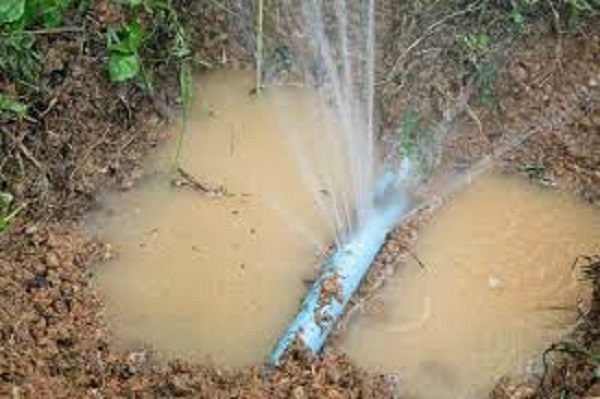
In addition, dangerous situations can arise when cables and pipes are damaged. For example, damage to a gas line creates the danger of explosion. And damage to an electrical line creates the danger of electrocution.
However, there is another adverse consequence of damage to cables and pipes. Today's society relies on having gas, water, electricity and internet always present. To ensure this, an undamaged cable and pipe network is enormously important.
The government has realized this as well. It instituted the WION Act in 2008. In 2018, this law was replaced by the WIBON.
The purpose of the WIBON and before that the WION is to limit damage to the cable and pipeline network as much as possible. An important part of this is to properly map all cables in the Netherlands. And that is done, of course, by measuring the cables and pipes.
So surveying cables and pipes is not only important for preventing financial losses. But surveying cables and pipes prevents dangerous situations and keeps society happy.
What is the best way to measure existing cables and pipes?
To measure existing cables and pipes, one must first know the approximate location of the cables and pipes. A klic notification is requested for this purpose. When a klic notification is requested, it is indicated where the excavation will take place and for what purpose.
Requesting a klic notification is done through the Land Registry. After making a klic notification, the Land Registry sends the data of the cables and pipes at the indicated location.
This data is used to determine where the test trenches can be dug. The trial trenches are often plotted with one of our GPS measuring systems. Our GPS systems can also directly read in a klic report.
Once the trial trench locations are plotted, then the trial trenches can be dug. This must be done around the cables and pipes by hand so that the cables and pipes are not damaged.
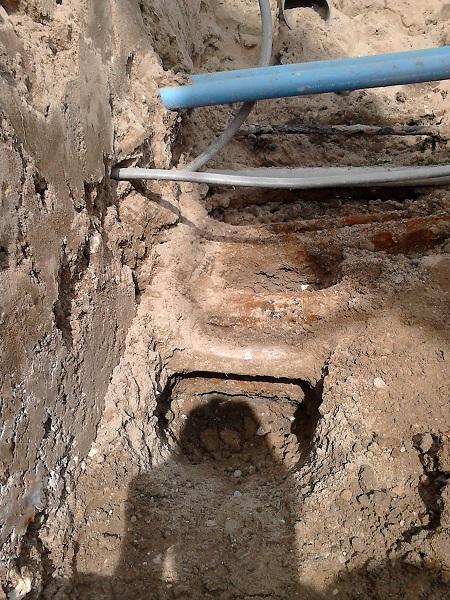
After the cables and pipes have been cleared, they can be measured using GPS.
The advantage of measuring existing cables and pipes in test trenches is that one can immediately see what kind of cable or pipe is involved. A disadvantage is that it is quite labor intensive.
Another way to map existing cables and pipelines is through ground penetrating radar. This is less labor intensive. However, it is not always possible to find out which cable and pipeline is which.
So the best way to measure existing cables and pipes depends on the purpose. If the cables and pipes only need to be determined globally, this can be done without any problems using ground penetrating radar. However, if more specific information is needed, then measuring the cables and pipes with GPS after digging a trial trench is the best way.
It is therefore easier to map deviations from the klic notification. This is still a requirement for WIBON compliance.
How to quickly measure newly laid cables and pipes?
Measuring newly laid cables and pipes is easier than measuring existing cables and pipes.
The big difference, of course, is that when measuring newly laid cables and pipes, the trench is still open. So the cables and pipes do not have to be searched for first.
This already makes the process of surveying newly laid cables and pipes faster than surveying existing cables and pipes.
Nevertheless, there is a demand from the market to measure newly laid cables and pipes as soon as possible. This is because measuring the cables and pipes is the last step before the trench can be closed.
And only when the trench is closed again can the other work in the project continue.
Being able to quickly measure cables and pipes therefore has a favorable effect on the schedule. And because of this favorable effect on the schedule, it also has a favorable effect on the budget.
To quickly survey newly laid cables and pipes, it is best to do this yourself. Hiring a surveyor often slows things down because the surveyor is not always there when the cables and pipes need to be measured.
When you have one of our GPS measuring systems on the project yourself, you can measure whenever you want. You won't have to wait for a surveyor to measure in because you can do it yourself. This allows you to close the trench faster and save time and money.
The beauty of our GPS surveying systems is that they work with the simple surveying software Apglos Survey Wizard. In this application, the automatic survey feature allows you to quickly follow the trace of the cable or pipe and it is automatically mapped.
You can also easily measure other objects with this surveying software, such as valves, fire hydrants, tees, etc.
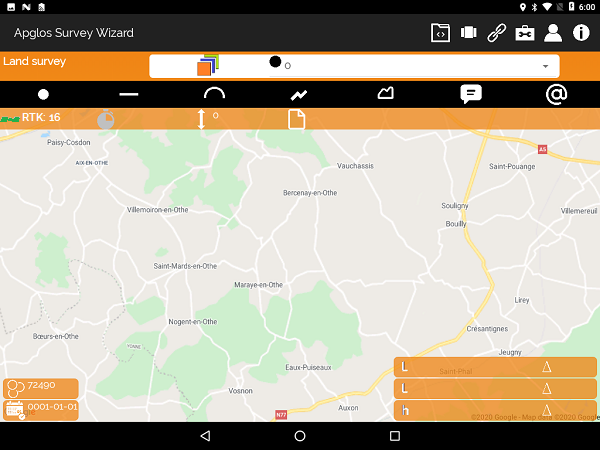
So surveying newly laid cables and pipes with a GPS system with Apglos Survey Wizard works fastest.
Are there any specific requirements for surveying cables and pipes?
The WIBON says a lot about how the communication of cable and pipeline information should be done. But it says less about what all must be recorded. In fact, this depends somewhat on the network operator and which discipline is involved.
In fact, there are many different types of cables and pipes. Most people are familiar with gas, water and electricity, of course. But there is also data transmission, fuel, sewage, etc.
And then you have to remember that there are some 1100 different network operators in the Netherlands. In turn, many grid operators have different requirements for recording or measuring cables and pipes.
The requirements for recording or measuring cables and pipes are often set out in the specifications. These specifications then state exactly which data must be recorded and which objects must be measured.
When measuring cables and pipes, it is wise to read the section of the specifications containing the requirements for measuring cables and pipes. Only in this way can you ensure that what you measure will be approved.
And this is advisable, because the measurement data is often delivered to the client after the trench is sealed.
It may also be that a party other than the network operator still has requirements regarding the measurement data of cables and pipes. For example, Prorail, which manages the Dutch railroad, has requirements regarding the measurement data of all cables and pipelines, which lie along the railroad or cross the railroad.
Apglos, the developer of Apglos Survey Wizard, has developed a measurement app for this purpose, so that all the data required by Prorail is actually measured. If you would like to know more about this please take contact us on.
Are there any other tips for surveying cables and pipes?
Much I have already described in this article about surveying cables and pipes. But there are still some tips that may be useful to know.
The purpose of surveying cables and pipes is to ensure that the cables and pipes are not damaged. This means that you must also be careful while surveying.
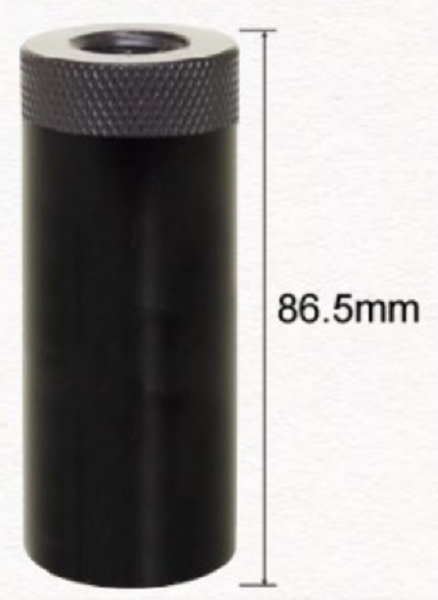
Bumping a GPS measuring stick against a cable or pipe can damage it. And that is not the intention. It is therefore convenient to replace the pole tip that is normally under the GPS measuring stick with a flat base. This will make the cables and pipes less likely to be damaged.
Another tip is to read the klic report into Apglos Survey Wizard so that it is available immediately and at all times. This way, the location of the existing cables and pipes is always quickly available and you can prevent damage to cables and pipes without taking a lot of time.
Final Conclusion
There is a lot to report on this topic of GPS surveying. So we hope that you have picked up at least some of it and that you can take advantage of it.
However, everything written in this article is theory. If you want to put this theory into practice you can.
Indeed, you can use this website to purchase a GPS measurement system try or purchase. When you do then you can immediately put into practice what you have learned by reading this article on surveying cables and pipes. And you can see if working with our GPS measuring equipment is something for you.
Of course, when you try or buy one of our GPS measurement systems, you will receive a short and clear explanation so that you can get started with it right away.
If you would like a demonstration first, you can book one here. During a demonstration or short explanation you can also ask specific questions about measuring cables and pipes.
 Want to schedule a demo? You can do that through whats!